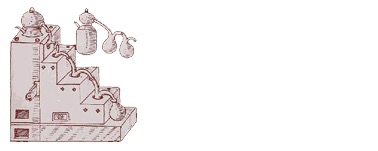
Philosopher-chemists in Alexandria, Egypt practiced distilling from around the 2nd century B.C.
Their goal was not to distill spirits, but to obtain substances such as sulphur, mercury, and arsenic in order to alter the external composition of base metals and colour them gold.

⚫100s BC
⚫28 BC
The earliest recorded wine distilling recipe is traced by some scholars to Anaxilaus of Thessaly. Alchemists believed that distillation released the essence or “spirit” of a substance.
Such spirits were used in Dionysian cults when celebrating festivals and religious rituals.
First written reference to a juniper-based tonic in the Dutch Publication, “Der Naturen Bloeme" - “The Flower of Nature”.
Physicians through the ages used juniper in their preparations due to its reputation as a diuretic (we hate to state the distasteful obvious but a diuretic is something that increases the excretion of urine). For centuries juniper infused compounds would be used to treat conditions of the stomach, kidneys and liver.

⚫1269
Juniper flavoured spirits emerge in the Low Countries (Belgium, Holland, and parts of Northern France.)
⚫1560's

⚫1572
Professor Sylvius De Bouve is credited with creating the first Genever, a neutral distilled spirit flavoured with juniper and malt wine

The first confirmed date for the production of gin is the early 17th century in Holland, it was produced as a medicine and sold in chemist shops to treat stomach complaints, gout and gallstones. To make it more palatable, the Dutch started to flavour it with juniper, which had medicinal properties of its own. It was so palatable in fact, that cases of reported illnesses soared as the masses tried to acquire this ‘genever’ that was only available in pharmacies. The demand was so high that numerous small distilleries emerged and the commercial, non-medicinal version was born.
⚫Early 1600's

Dutch Courage.
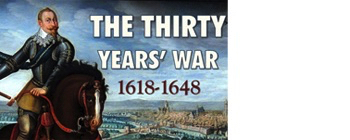
English troops fighting alongside the Dutch in the Thirty Years' War (1618-1648) noticed that the Dutch soldiers were extremely courageous in battle. This bravery became attributed to the calming effects of the genever that they sipped from small bottles hanging from their belts. English soldiers returning home from the war spread the news of this genever and the Dutch began to import it all over the world in their vast fleet of trade ships.
⚫1618-1648
The Worshipful Company of Distillers is granted a Royal Charter.
Sir Theodore de Mayerne, physician to Charles 1st, who in 1638 obtained the Chater to regulate the distilling trade. Members had the sole right to distil spirits in London and Westminster and up to twenty-one miles ) later 31miles beyond, improved both the quality of gin and its image It also helped English agriculture by using surplus corn and barley.

⚫1628
⚫1689

William of Orange from Holland becomes King William III of England. He made a series of statutes actively encouraging the distillation of English spirits. (He started by banning French imports including trendy Brandy.) Anyone could now distil by simply posting a notice in public and just waiting ten days. Sometimes gin was distributed to workers as part of their wages and soon the volume sold daily exceeded that of beer and ale, which was more expensive anyway.
⚫1723-1752
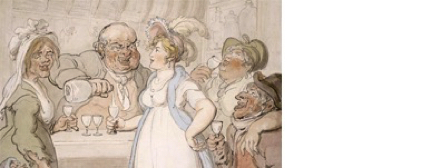
With many water-borne diseases prevalent around London, gin became a safe drink for the poor. In excess of 7,000 spirit shops sprung up around London and gin became known as the opium of common people. This was the period in London where the death-rate beat out the birthrate. The cost of gin used to be so cheap that the poor would indulge to excess. London an epidemic of extreme drunkenness. The effect of low quality gin has been compared to the crack epidemic in the U.S. in the 1980s. Women more than men fell foul of gin so the spirit gained a famine identity and earned itself nicknames like 'Ladies' Delight', 'Mother Gin' or 'Madam Geneva'. The term, 'Mother's Ruin', survives to this day.
⚫1751
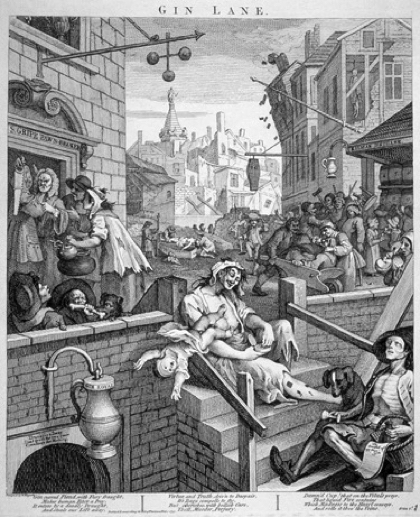
William Hogath’s Engraving “Gin Lane”. London becomes a landscape of hell in this vision of a society falling down. A baby is dropped into the abyss. Addicts slump in the streets. A building tumbles and a corpse is dumped in a cheap coffin. He is condemning the craze for gin, the heroin of its day, in this image of the poor drinking themselves to death.
⚫1729 & 1736 & 1751
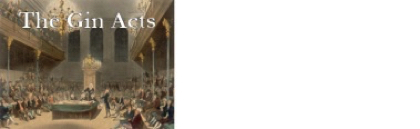
Politicians and religious leaders argued that gin drinking encouraged laziness and criminal behaviour. In 1729, Parliament passed a Gin Act which increased the retail tax to 5 shillings per gallon. With the Gin Act 1736 the government imposed a high licence fee for gin retailers and a 20 shillings retail tax per gallon. These actions were unpopular with the working-classes and resulted in riots in London in 1743. The license fee and tax were lowered significantly within a few years.
The Gin Act of 1751 prohibited gin distillers from selling to unlicensed merchants, restricted retail licenses to substantial property holders, and charged high fees to those merchants eligible for retail licenses. To offer the masses another invigorating (and non-alcoholic) beverage the import of tea was also encouraged. Also men were encouraged to drink beer.
⚫1729 & 1736 & 1751
The name Old Tom Gin purportedly came from wooden plaques shaped like a black cat (an "Old Tom") mounted on the outside wall of some pubs above a public walkway in 18th century England. Owing to the Gin Craze, the British government tried to stem the flow of gin with prohibitive taxes and licensing, which drove the scene underground. Under the cat's paw sign was a slot to put money in and a lead tube. From the tube would come a shot of gin, poured by the bartender inside the pub.
⚫1769
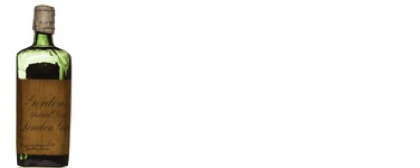
Gordon's London Dry Gin was developed by Alexander Gordon, a Londoner of Scots descent. He opened a distillery in the Southwark area in 1769, later moving in 1786 to Clerkenwell
⚫1806
First written definition of a cocktail in "The Balance and Columbian Repository", a New York newspaper.

⚫1823
⚫1831
⚫1830's
⚫1850's
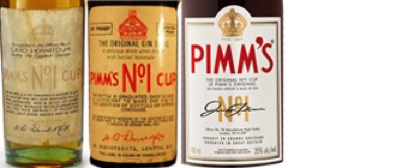
Englands favourite summertime drink, Pimm's was created by James Pimm in 1823.
Pimm was a London oyster bar owner who concocted the mixture of gin, fruit and herbs to accompany seafood.
Serving it in a small tankard known as a
"No. 1 Cup", hence its subsequent name.
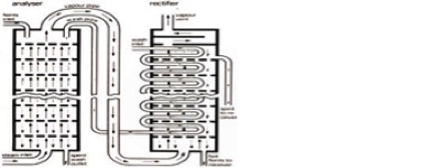
Aeneas Coffey invents column still or continuous still.
The invention of the distillation column led to a significant shift in quality and the emergence of a new type of gin, known as the London Dry style. The smoother taste of the distilled spirit allowed for the aroma of the botanicals to become predominant and many companies started to develop gins with a wider range of complex flavourings.
With the step in in the quality of Gin it quickly became a a more upmarket acceptable drink with Exquisite Gin Palaces, established for the society’s gentlemen; they were luxuriously furnished and provided extravagant entertainment.
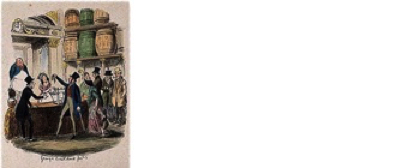
High end US saloons have bartenders experimenting and combining different alcohols-many Genever or Gin based
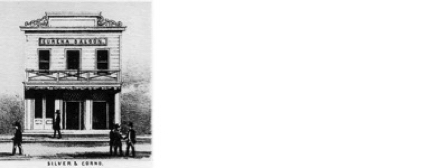

French barman Alexis Soyer opens London’s first cocktail bar.
Soyer, London’s “First Celebrity Chef”, offered a wondrous choice of 40 cocktails to the six million visitors who attended the Great Exhibition in Hyde Park. Because the exhibition organisers asked him to make non-alcoholic drink, Soyer set up shop round the corner instead so that he could make his drinks as punchy as he wanted.
First quinine based tonic emerges, the bitter taste of anti-malarial quinine tonic led British colonials in India to mix it with gin.

Jerry Thomas publishes the first known bartending guide.
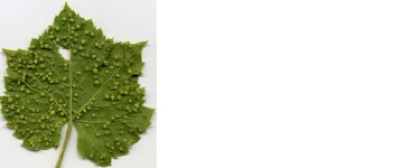
Phylloxera (louse or aphid) attacks French grapevines, wine supplies suffer, allowing absinthe and Gin to fill the vacuum.
⚫1863
⚫1862
⚫1858
⚫1851
⚫1870
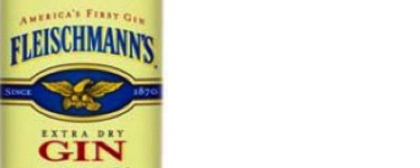
First American dry gin produced.
The Fleischmann Brothers establish their distillery in Ohio in 1870 and produce the first American dry (unsweetened) gin.
1876
Beefeater Gin Launched
⚫1920-1923
Makers of spirits hailed 2016 as the “year of gin” after it was revealed we are now drinking more of the juniper-flavoured tipple than ever.
Annual sales topped £1 billion for the first time as the UK collectively knocked back 283,000 hectolitres (equivalent of 40 million bottles) of the spirit, - equivalent to 1.12 billion gin and tonics.
A total of 40 new distilleries opened in the UK between January and November, a rapid expansion from the 116 in operation in 2010.
British gin is now sold in 139 countries around the world, with America, Canada, Spain and Germany buying the most.
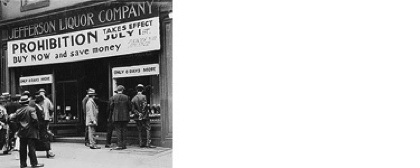
American Prohibition ‘the Noble Experiment’ forces many skilled bartenders to head overseas. Poor quality/dangerous spirits spread as does organised crime. After prohibition, much of the bartending culture was lost and quality cocktails fade to obscurity.
⚫1960
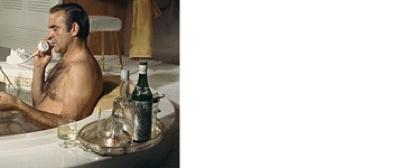
Sean Connery as James Bond re-ignites cocktail passions for the martini which must be shaken not stirred
⚫1988
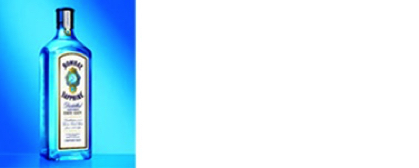
Bombay Sapphire launched.
Throughout the eighties gins sales plummeted as vodka increased in popularity, particularly in the UK. Love or hate Bombay Sapphire its launch was daring and inspired. It marked the turning point for the fortunes of gin. On the back of it, large distillery houses drive a relentless campaign to capture their share of an increasing demand for dry gin world-wide. Brands such as Tanqueray, Gilbeys, Gordons and Bombay Sapphire become synonymous
⚫1995
Desmond Payne
After 25 years at Plymouth Gin where he rose to be chief distiller and distillery manager, Desmond Payne, moved to Beefeater where is is today. He is one of the industry’s most accomplished distillers and arguably one of the spirit’s most enthusiastic ambassadors. He’s also one of its most inquisitive and clever; consistently experimenting and pushing gin’s boundaries.

⚫2003
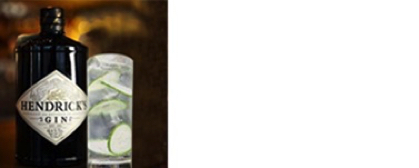
Hendrick’s Gin Launched - A new style of gin is introduced by William Grants, which uses unusual botanicals. Hendricks Gin takes the cocktail scene by storm with a gin infused with roses and cucumber.
EU gin definitions:- On 20th February 2008, a new EU definition recognising and legislating what can be termed a 'gin' passed into EU law as part of the revised EU Spirit Drink Regulations. These rules include three distinctive definitions of gin: 'Gin', 'Distilled Gin' and 'London Gin'. Their introduction led to some gins being forced to change their labelling with gins such as Martin Miller's no longer able to use the term 'London dry gin' due to additional flavourings being added after distillation.

⚫2003
⚫2009
World Gin Day, founded by Neil Houston as a day to bring his friends together to drink gin, has grown into a global celebration!
In 2013 Emma Stokes, aka Gin Monkey took over. World Gin Day falls on the second Saturday in June.

⚫2010
A worldwide interest in alternative, artisan gins sees the rise of small independent distilleries such as Sipsmiths of London, Bluecoat in the USA and Blackwoods from Shetland.


⚫2014
Junipalooza:- Juni, an abbreviation of Gin’s signature botanical, juniper.
Palooza: a party, celebration or festival.
Gin Foundry Launch Junipalooza.
It coincides annually with World Gin Day, a great day to enjoy well over 100! Gins from over 50 producers.
⚫2014